Spring's first pest
Ant Control in Salt Lake City Homes
Ants are the first pest most Salt Lake Valley homeowners deal with each year. The trail appears at a kitchen baseboard or bathroom sink some warm week in April, gets sprayed, disappears for a few days, and comes back two feet to the left.
That cycle is the defining feature of bad ant control. Killing foragers does nothing to the colony, and with some species it makes the problem worse by splitting one colony into several.
- Typical cost
- $120–$250 initial treatment; $45–$70 on a quarterly plan
- Season
- April through September, with peaks after the first heat and after heavy watering
- Timeline
- 7–14 days for baiting to eliminate a colony
Signs to look for
- —Persistent trails along baseboards, countertops, or window frames
- —Small piles of fine soil at sidewalk and driveway cracks
- —Coarse sawdust-like shavings near a window frame or deck ledger (carpenter ants)
- —Winged ants indoors in spring
- —A rotten-coconut smell when an ant is crushed (odorous house ants)
The four ants that matter in this valley
Odorous house ants are the most common indoor invader here: small, dark, and prone to enormous colonies with many queens. They forage for sweets and moisture, which is why they show up in kitchens and bathrooms.
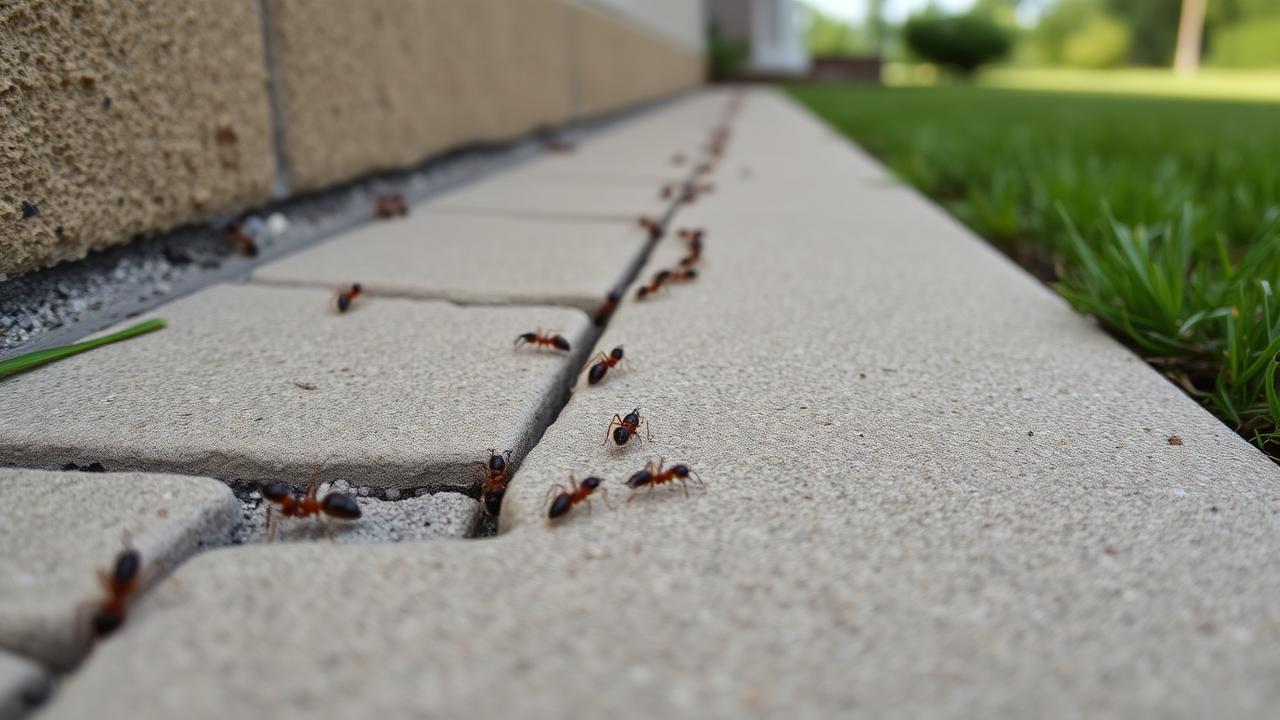
Pavement ants nest under sidewalks, driveways, and slabs, leaving small soil piles at cracks, and enter along the slab edge and through the garage.
Carpenter ants are large and black, common in the canyons and in benchside neighborhoods with mature trees. They excavate galleries in wood softened by moisture — around a leaking window, a deck ledger, or a chronically wet rim joist. They do not eat wood; they hollow it.
Field ants build large mounds in lawns and along fence lines and rarely come inside, but they will defend a mound aggressively when it is mowed over.
Why spraying the trail backfires
Odorous house ants respond to stress by budding: satellite queens leave and start new colonies. Spraying a visible trail with a repellent product is exactly the stress that triggers it, which is why one trail becomes three after treatment.
Baiting works with their behavior instead. Workers carry the bait back and share it through the colony, reaching the queens. It looks slower for the first two days — you will see more ants, not fewer, because they are recruiting to the bait — then the trail collapses.
Resist cleaning up the trail with vinegar or bleach until baiting has run its course. The pheromone trail is what leads workers to the bait.
Carpenter ants are a moisture story
Finding carpenter ants indoors in winter means a nest inside the structure, not a wandering forager. Look where water has been: under the bathroom subfloor, at the base of a leaking window, in a deck ledger, in the rim joist above a poorly draining foundation.
Treatment means locating and treating the nest, usually with dust injected into the void, and then fixing the water. If the wood stays wet, another colony will use the same gallery system.
Homes in Millcreek, Cottonwood Heights, Holladay, and the canyon mouths — mature trees, older wood decks, shade — see the most carpenter ant work in the county.
Cutting off the highways
Trim tree limbs and shrubs so nothing touches the roof or siding; branches are bridges that bypass every exterior treatment you have paid for. Pull mulch and rock back from the foundation and keep an inspection gap visible.
Seal the obvious entries: gaps around the kitchen plumbing penetration under the sink, the utility line entry, window frame gaps, and the garage door seal. Then remove the reward — wipe counters, cover the pet food, and rinse the recycling.
When to bring in a professional
Call if you see carpenter ants indoors, if trails come back within two weeks of DIY baiting, if you have multiple entry points on different sides of the house, or if you find winged ants indoors and cannot rule out termites.
A professional visit should include identification, exterior perimeter treatment with a non-repellent product, targeted baiting, and — for carpenter ants — a moisture inspection. A technician who only sprays the baseboard has not done the job.
Common questions
Why do ants come back after I spray?
Spraying kills foragers, not the colony, and repellent products can cause multi-queen species like odorous house ants to split into additional colonies. Baiting reaches the queens, which is what ends the trail.
Are carpenter ants as damaging as termites?
They cause damage more slowly and only in wood that is already moisture-compromised, but a long-established colony can significantly weaken a rim joist, sill plate, or deck ledger.
What attracts ants into Utah kitchens?
Water first, sugar second. Dry summers push ants toward the moisture around sinks, dishwashers, and irrigated foundation beds, and any sweet residue on a counter keeps them coming.
Service details by area
Related guides
More reading
Disclaimer
This site is a free service to assist homeowners in connecting with local service providers. All contractors/providers are independent and SLCPestControl.com does not warrant or guarantee any work performed. It is the responsibility of the homeowner to verify that the hired contractor furnishes the necessary license and insurance required for the work being performed. All persons depicted in a photo or video are actors or models and not contractors listed on this site.