Commercial & property
Bird Control Services in Salt Lake City
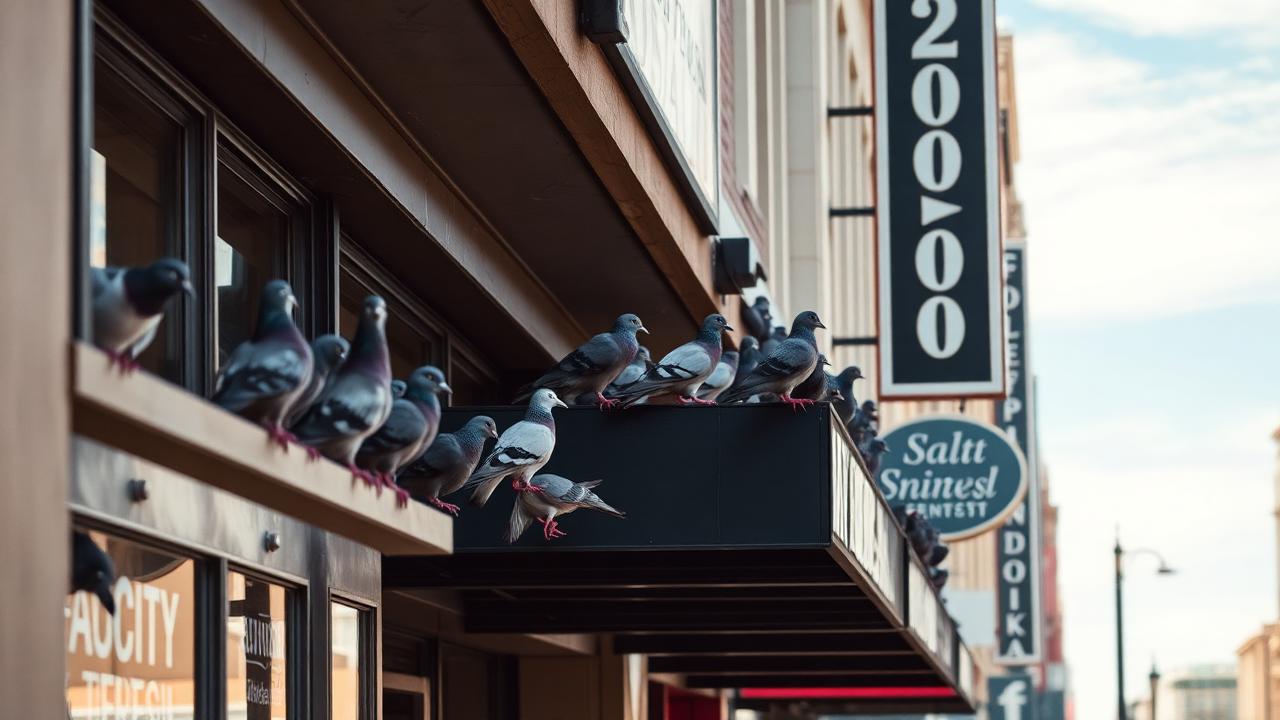
Bird problems are mostly a building problem. Pigeons, European starlings, and house sparrows exploit ledges, signage, rooftop equipment, warehouse rafters, and parking structures — and in downtown Salt Lake City, the older masonry buildings with deep cornices are ideal habitat.
Bird control is exclusion engineering. Nothing about it involves spraying, and the durable results come from making surfaces physically unusable rather than trying to scare birds away.
- Typical cost
- $8–$25 per linear foot for ledge deterrents; netting projects often $2,000–$15,000+
- Legal note
- Pigeons, starlings, and house sparrows are not federally protected; most native birds are
- Health
- Droppings accumulations can carry histoplasmosis and cryptococcosis risk
Signs to look for
- —Droppings accumulating on sidewalks, signage, or storefront awnings
- —Nesting material in rooftop HVAC units and exhaust louvers
- —Birds roosting inside a warehouse or covered loading dock
- —Clogged roof drains and corroded metal from accumulated droppings
- —Bird mites appearing indoors after a nest is abandoned
The three species you can legally control
Feral pigeons, European starlings, and house sparrows are non-native and not protected under the Migratory Bird Treaty Act, so control work on them is generally permissible. Nearly every other bird you will see — swallows, finches, robins, raptors — is federally protected, and disturbing an active nest can carry real penalties.
Cliff swallows nesting under bridges and building overhangs are a common Utah situation and a common way property managers get into trouble. Netting must be installed before nesting begins, not after eggs are present.
When in doubt about a species, get an identification before touching a nest. This is one of the few pest situations with federal exposure attached.
What actually works: physical exclusion
Netting is the gold standard for enclosing an area completely — courtyards, loading docks, parking structures, warehouse rafters, and building recesses. Installed correctly with proper tension and edge attachment, it lasts a decade.
Ledge products handle narrower surfaces: stainless spikes on flat cornices and signage, post-and-wire systems on parapets and rails, sloped coverings that remove the flat surface entirely, and electrified track that delivers a harmless deterrent shock on high-value architectural ledges.
Sonic devices, plastic owls, reflective tape, and gel repellents produce short-lived results at best. Birds habituate quickly, and an urban pigeon in downtown Salt Lake has seen all of it.
Droppings cleanup is a health job, not a janitorial one
Accumulated droppings can host Histoplasma capsulatum and Cryptococcus, and dry droppings become airborne during cleanup. Proper remediation means respiratory protection, wetting the material before removal, containment, and disposal, not a leaf blower on the roof.
Droppings are also acidic and corrode paint, metal, and stone. On a commercial roof, unaddressed accumulation damages membrane and clogs drains, which turns a bird problem into a roofing claim.
Abandoned nests frequently release bird mites into the building, and interior complaints of biting insects with no bed bug evidence often trace back to a nest in a nearby soffit or HVAC unit.
Residential bird issues
Homes see smaller versions of the same thing: starlings and house sparrows nesting in dryer vents, bathroom exhaust terminations, and attic gable vents, and pigeons on solar panel arrays — which have become one of the most common residential bird complaints along the Wasatch Front.
Solar panel exclusion uses a clip-mounted mesh skirt around the array perimeter. Vent nesting is prevented with proper hooded vent covers with functioning dampers. Neither requires anyone to harm a bird.
Planning a bird project
A useful proposal starts with a site survey identifying species, roost points, pressure level, and the specific surfaces to be treated, with a drawing or photo map. Ask for the warranty on both material and workmanship, because failed netting installations are almost always attachment failures.
Schedule outside nesting season where possible, and coordinate with roofing and facade work — deterrents installed before a facade repair get destroyed by it.
Common questions
Is it legal to remove a bird nest in Utah?
It depends on species. Pigeons, European starlings, and house sparrows are not federally protected. Most native species are protected under the Migratory Bird Treaty Act, and active nests cannot be disturbed.
Do bird spikes hurt birds?
No. Spikes are a physical landing deterrent, not a weapon. They make a ledge unusable rather than causing injury, which is why they are the standard on architectural surfaces.
Why did birds come back after we cleaned the roost?
Because cleaning removes the mess, not the site. Pigeons return to the same ledges for years unless the surfaces are physically excluded with netting, wire, or spikes.
Service details by area
Related guides
More reading
Disclaimer
This site is a free service to assist homeowners in connecting with local service providers. All contractors/providers are independent and SLCPestControl.com does not warrant or guarantee any work performed. It is the responsibility of the homeowner to verify that the hired contractor furnishes the necessary license and insurance required for the work being performed. All persons depicted in a photo or video are actors or models and not contractors listed on this site.